
In Gold We Trust
Succession, Status, Safety, Sovereignty… and a Little Seed for Tomorrow

Gold in India is not just a metal — it's emotion, tradition, and trust.
It’s succession – what we pass on — from grandmother to mother, and mother to daughter.
It’s safety, too — especially in an India emerging from an agrarian, underbanked, and uninsured past.
Gold was the fallback when crops failed, money ran out, or emergencies struck.
It’s status — the sparkle we chase when buying wedding jewelry, keeping up with friends, or celebrating birthdays and other milestones.
It’s symbolism — shining the brightest on Dhanteras, Akshaya Tritiya, and other auspicious days.
That connection lives on. The recent price surges have only amplified the Indians’ love for this old flame.
Let’s try to make sense of what is happening globally that has captured almost everyone’s imagination, not just Indians.
Sovereignty Comes into Play
Central banks are buying gold. Consistently. They have been doing so for more than three years now.
Global Gold Demand Components
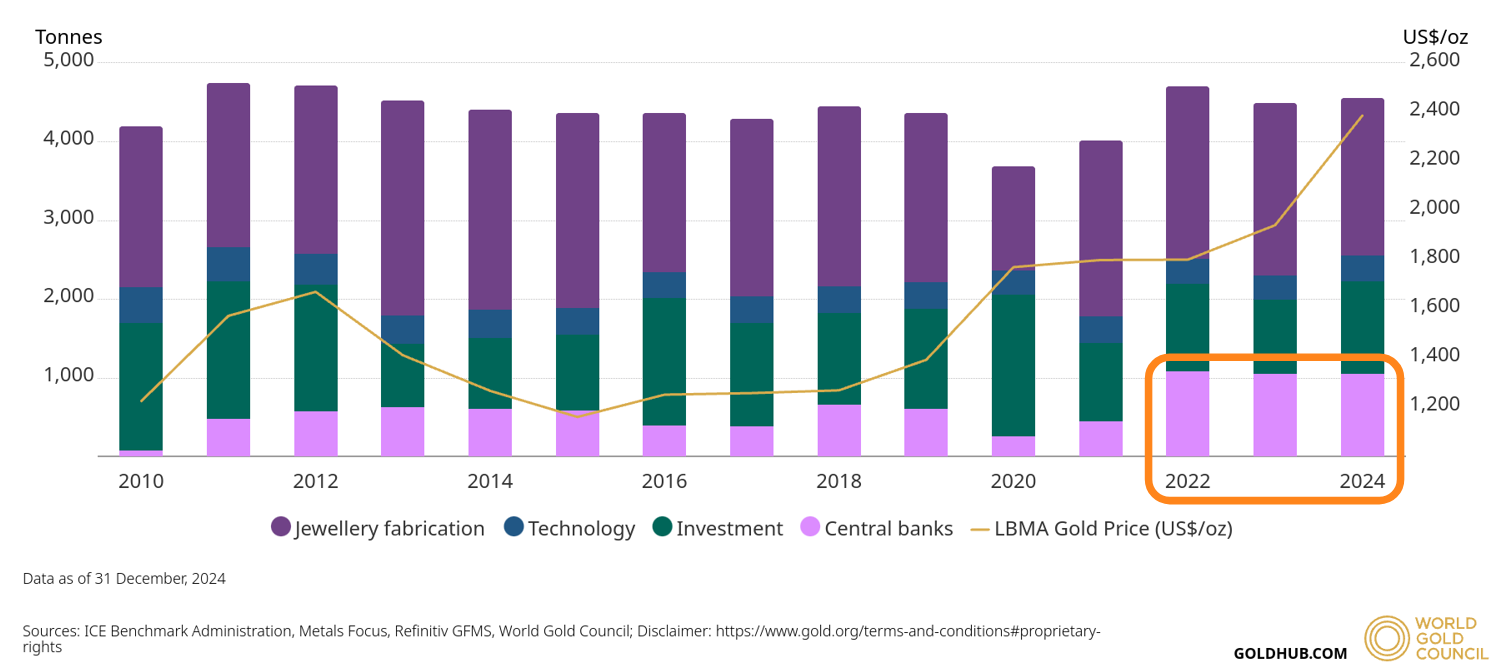
Why? Security.
When the US froze Russia’s dollar-denominated forex reserves, they became worthless overnight.
Gold, unlike foreign currency reserves, doesn’t come with that kind of counterparty risk. It’s free from any foreign government’s control – it’s sovereign.
Think of it like insurance for a country’s foreign exchange reserves. A bulky, expensive physical safety net, that in turn, needs insurance, storage and security, but a safety net nonetheless!
Trump’s recent antics have only added fuel to the safe-haven fire, with participants other than central banks now joining the gold rush.
Now pause here.
If gold is insurance for countries’ reserves…
Can it be the same for your personal portfolio?
Breaking Down the Safety Net
To answer this, we first need to understand: what exactly we, as regular investors, could be trying to shield ourselves from.
Volatility: Yes, gold can help balance your portfolio when financial markets wobble — just like fixed deposits or liquid funds do.
Inflation: Contrary to popular belief, gold has been an unreliable short- to medium-term hedge against inflation
Extreme economic mismanagement or political crises: Thankfully, this isn’t a huge concern for the foreseeable future in a stable and growing economy like India.
So, for central banks, paying a high price for gold might still make sense. They’re protecting their ammo — their firepower.
For our grandparents, gold was a tool for survival. My ancestors probably made it through the Partition because they had some gold to barter.
For uninsured farmers, it was their only fallback when rain gods failed and zamindars didn’t.
But what about you?
Imagining the Shrub from the Seed
Okay, so, let’s assume you're not seeking a safe haven. You’re sowing a seed today, hoping for a steady sapling tomorrow, and a strong shrub the day after.
It’s not the safety you’re chasing in gold — it’s growth. It’s about seeing your wealth bloom over time.
Let’s take a quick look at how gold prices have grown – from both a global and Indian perspective.
Gold Price Journey: From Global to Local
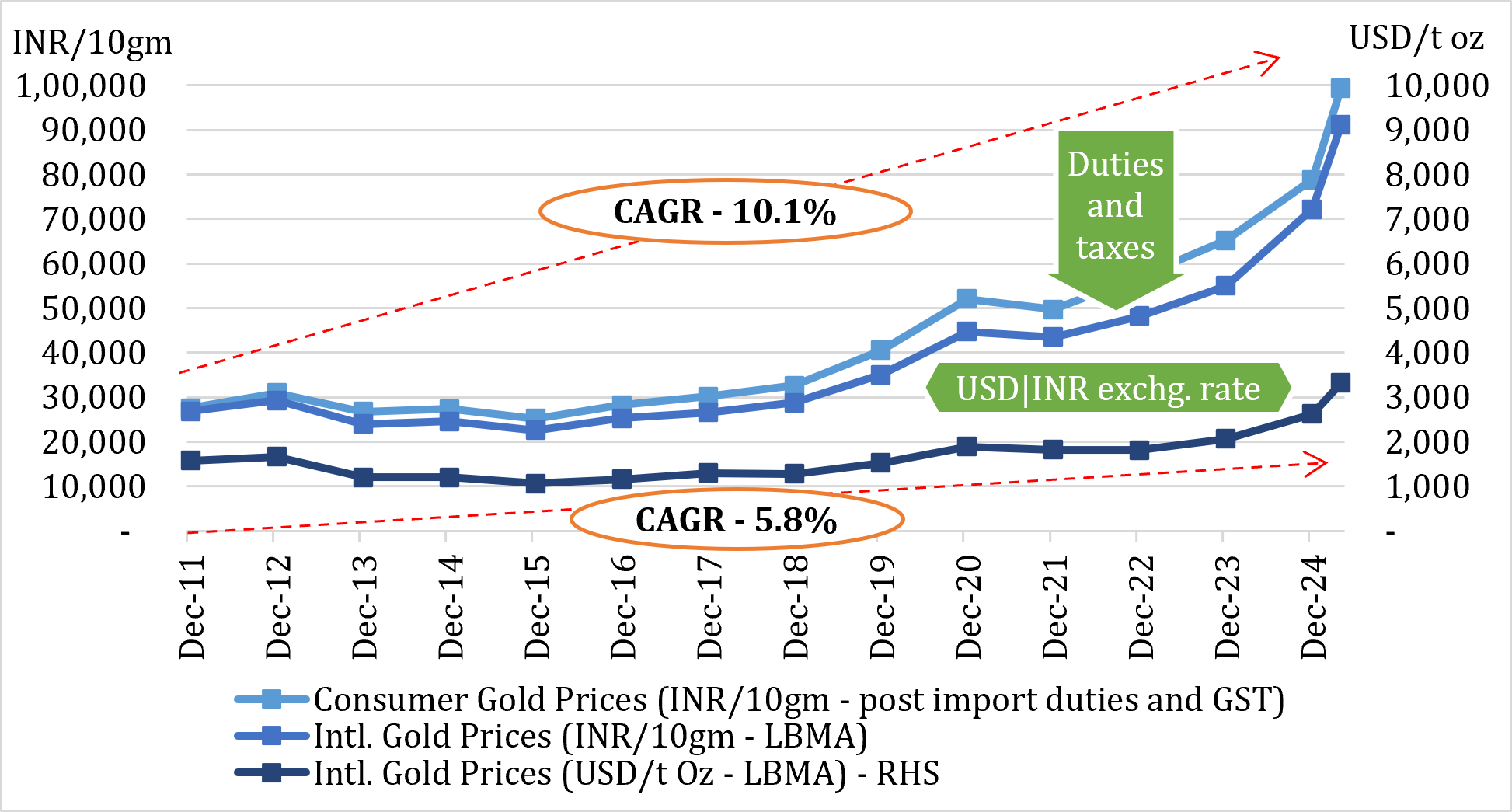
Now, based on this, here’s a simple exercise.
Take a moment and think — what do you believe gold’s price returns (CAGR) could look like over the next 5 years and 10 years, in both USD and INR?
Just four numbers — that’s it!
Drop them in the comments below.
Would love to see what you think!
Thanks for reading Manchu’s Money Musings. We’ll renew this conversation next week — and together, we’ll try to find some answers to the questions we’ve left open today!